Introduction
Nobody plans to destroy their septic system. But thousands of homeowners do it anyway, one flush, one grease pour, one skipped pumping at a time. Septic failure doesn’t arrive with a warning; it arrives with sewage in your bathtub, a yard that smells like a treatment plant, and a repair situation that puts your home out of commission. And the awful thing about this is that the habits that are doing all this seem completely harmless at the time. That’s exactly what makes them so dangerous.
At Danos Septic, we’ve seen the full picture, and we’re here to make sure you never have to live it.
This blog walks you through 10 everyday septic system mistakes that silently destroy systems, and exactly what to do instead. If you care about how to protect your septic tank and how to extend septic system life, this is worth reading to the end.
Habit #1: Flushing “Convenient” Items That Don’t Belong
Why “Flushable” Is a Lie Your Septic System Pays For
Here’s something the packaging won’t tell you: “flushable” wipes do not disintegrate in a septic tank. Independent lab tests have confirmed they remain intact for months. Unlike toilet paper, they don’t break down like toilet paper; they build up, block, and stress your system into early destruction.
What not to flush in a septic system:
- Wipes (including “flushable” ones)
- Cotton balls, swabs, dental floss
- Feminine hygiene products
- Paper towels, tissues, medications
One rule. Nothing goes down the toilet except human waste and single-ply toilet paper.
Habit #2: Pouring Grease, Oil, and Food Scraps Down the Sink
Grease doesn’t flow down your pipes; it cools, hardens, and sticks. This causes a thick layer of scum to form within your tank, suffocating the bacterial activity that is keeping your system alive. FOG (fats, oils, grease) is consistently ranked among the leading causes of residential septic failure.
Cool it, jar it, trash it. That’s the only right answer when it comes to cooking grease.
Habit #3: Treating the Garbage Disposal Like a Trash Can
Research from the University of Minnesota Extension found that homes with garbage disposals require pumping up to 50% more frequently than those without. Ground food particles don’t just disappear; they enter your tank, building up faster than bacteria can break them down and shortening the useful life of your system by a noticeable amount.
Limit disposal use significantly, or eliminate it. Your tank is not a food processor.
Reality Check: If you ignore a septic system, it doesn’t just fail; it contaminates. Failing systems are a major source of groundwater pollution in rural Washington. What you throw down the drain today may be in your drinking water tomorrow.
Habit #4: Overusing Bleach and Harsh Cleaners
Your Tank Runs on Bacteria: Stop Killing It
Your septic tank is a living ecosystem. Billions of anaerobic bacteria break down solids daily. Pour in bleach, chemical drain openers, or heavy antibacterial cleaners regularly, and you wipe out that bacterial population. If you don’t, solids build up unchecked, and your system degrades faster than any inspection schedule can catch.
| Use These | Avoid These |
| Septic-safe detergents | Bleach-based cleaners |
| Baking soda + vinegar | Chemical drain openers |
| Mild dish soap | Heavy antibacterial soaps |
Switch to septic-safe products. It’s one of the simplest septic system maintenance tips with the longest-lasting impact.
Habit #5: Running Too Much Water at Once
Flooding your tank with water all at once prevents solids from settling properly. Solids will go to the drainfield and clog it up, saturating the soil and ultimately destroying the field altogether if they are pushed out before they have been broken down.
Septic system water usage needs to be spread throughout the day:
- Stagger laundry loads across the week
- Don’t run the dishwasher and washing machine simultaneously
- Install low-flow fixtures where possible
The system can handle your household’s daily water needs, just not all at once.
Habit #6: Ignoring Leaky Toilets and Faucets
A leaking toilet can silently push 200 gallons of extra water per day into your septic tank. That’s not a minor inconvenience; that’s continuous hydraulic overloading. It builds up in your drainfield over weeks and months and causes the kind of soil damage that no pumping appointment will fix.
Drop a dye tablet into your toilet tank. If color appears in the bowl without flushing, you have a leak. Fix it immediately.
Think of your septic system like a filter. Overload it, and it stops filtering. Once the drainfield is saturated, you’re not looking at a repair; you’re looking at a replacement.
Habit #7: Using the Toilet as a Trash Bin for Chemicals
Paint, solvents, pesticides, pool chemicals, and motor oil are things that ruin septic systems at a biological level. They don’t just kill bacteria; they leach into the soil and contaminate the groundwater. In a state such as Washington, where many rural residences depend on well water, this is not a hypothetical risk. It is a public health concern that has been documented.
Dispose of hazardous materials through Washington’s county-run hazardous waste programs. Not down the drain. Not ever.
Habit #8: Parking, Building, or Storing Heavy Items on the Drainfield
Drainfield pipes sit in gravel-filled trenches under your yard. They aren’t meant to carry weight. Vehicles, sheds, concrete, and even repeated foot traffic compact the soil and crush the pipe network below. When that structure fails, the drainfield cannot be repaired; it must be replaced.
Mark your drainfield. Keep it clear. This is non-negotiable in the septic tank do’s and don’ts of responsible homeownership.
Habit #9: Planting Deep-Rooted Trees and Shrubs Too Close
Roots seek moisture instinctively, and your septic pipes are a constant source of it. They infiltrate hairline cracks, expand inside pipes, and eventually fracture them, all while the damage remains completely invisible aboveground. By the time you see the symptoms, the root intrusion is significant.
| Plant Type | Safe Distance |
| Small shrubs | 10 feet |
| Ornamental trees | 25 feet |
| Large trees (willow, oak, maple) | 50+ feet |
Grass is the only safe drainfield cover. It stabilizes soil without threatening your system.
78bh
Habit #10: Skipping Regular Pumping and Ignoring Warning Signs
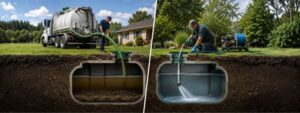
This is where most long-term damage gets locked in. Most tanks need pumping every 3–5 years, depending on household size. Let it go long enough, and the solids build up to the point where they overflow into the drainfield, the most expensive and least reversible type of septic failure.
Don’t ignore these warning signs:
- Slow drains throughout the home
- Gurgling sounds from toilets or sinks
- Foul odors near the tank or yard
- Sewage backup in tubs or sinks
- Wet, spongy, or unusually lush patches over the drainfield
If you see any of these symptoms in your system, waiting will only make it worse, not better.
Your Septic System Is Telling You Something: Are You Listening?
Understanding what not to do with a septic system is only useful if you act on it. Every habit covered in this blog compounds over time. Small neglect becomes major damage, and major damage becomes a situation that disrupts your entire household. Good septic system habits aren’t complicated; they just have to be consistent.
At Danos Septic, our team has provided residential and commercial septic system maintenance across Bremerton, Shelton, and Port Orchard for over 30 years. We offer inspections, pumping, repairs, drainfield rejuvenation, and full system installations, backed by a 10-year limited warranty on new residential installs when maintained by our team. We answer every call, 24 hours a day, 7 days a week, including weekends and holidays. No voicemail, no waiting, a Danos family member always picks up.
Your system won’t fix itself. Call Danos Septic today at (360) 697-1271 and let our team give you a competitive price and the septic solution that’s right for you.