Introduction
Most septic systems fail quietly, not with a dramatic collapse, but with years of slow, invisible damage that compounds until there’s no cheap fix left. Sludge builds past the safe threshold. Baffles corrode. Drainfield soils get saturated long before a homeowner notices soggy grass or catches a foul smell near the yard. Usually, the system has been in trouble for months before the problem becomes obvious. A single missed septic inspection can be the difference between a quick service visit and a months-long ordeal involving excavation, system replacement, and a property that’s temporarily uninhabitable.
Dano’s Septic has seen this pattern repeat for over 30 years, and in almost every case, it was preventable.
This blog breaks down what a septic system inspection actually involves, what inspectors find that homeowners miss, the real consequences of skipping service, and how to know when it’s time to call. If you own a property with an on-site sewage system, this is worth reading before something goes wrong.
What Is a Septic Inspection?
Most people assume a septic tank inspection means someone lifts the lid, glances inside, and gives a thumbs up. It’s significantly more involved than that.
What Certified Technicians Actually Evaluate
A certified technician performs a complete septic inspection, not just an inspection of the tank. In practice, it looks like this:
- Sludge, scum, and liquid levels are measured in every compartment of every tank in the system.
- Pump operation and dosing cycles checked for correct function.
- Drainfield area visually inspected for signs of stress or saturation.
- All system components verified to be in working condition.
- County documentation completed and submitted on the homeowner’s behalf.
Many counties in Washington State require the operations & maintenance (O&M) inspection of advanced treatment units (ATUs) for the protection of local groundwater and public health. These are not suggestions. They are mandatory and have a due date for compliance. Missing a deadline creates exposure both legal and financial.
Common Septic Problems Found During Inspections
What makes regular septic system inspection genuinely valuable is what it uncovers before the homeowner ever suspects a problem.
The Issues Most Homeowners Never See Coming
| Problem Identified | Why It Matters If Left Unaddressed |
| Sludge levels above safe threshold | Solids overflow into drainfield, causing irreversible damage |
| Pump failure or weak dosing | Wastewater backs up into the home |
| Baffle deterioration | Scum layer bypasses filtration, reaching the drainfield |
| Root intrusion in pipes | Blockages build gradually, then fail suddenly |
| Drainfield saturation | Soil loses absorption capacity permanently |
| Cracked or structurally compromised tank | Ground contamination and collapse risk |
The common thread in all of these is the same: slow, invisible, and costly once ignored long enough. None of them announces themselves until they have already done serious damage.
A drainfield doesn’t recover. Once it fails from neglect, you’re not repairing it; you’re replacing it.
How Septic Inspections Help Prevent Expensive Repairs
Catching Problems in the Window Where They’re Still Manageable
A pump showing early signs of wear during a routine septic maintenance visit costs a fraction of what an emergency replacement costs after a full backup event. High sludge caught during septic tank pumping prevents solids from migrating into the drainfield, which is the tipping point between a service call and a system failure.
The financial logic is straightforward: septic inspection services create a documented picture of system health over time. That history gives technicians a chance to see trends, not just one-visit snapshots. It is the difference between reactive and preventive septic system maintenance.
There’s also the environmental dimension. Washington State takes groundwater protection seriously. An uninspected, failing system that contaminates a well or a surface water source doesn’t just create repair costs; it can trigger regulatory involvement and fines that compound quickly.
Warning Signs Your Property May Need a Septic Inspection
Don’t wait for the scheduled window if your system is already trying to tell you something is wrong.
- Slow drains or sluggish flushing in multiple fixtures, not just one.
- Gurgling sounds from toilets or sinks when water drains elsewhere in the home.
- Sewage odors inside the house or near the drainfield area.
- Pooling water or unusually lush, green grass above the drainfield.
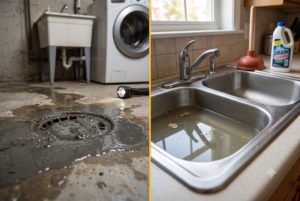
- Any sewage backing up into a fixture.
These are not small distractions to watch out for. They are signs of a system under active stress. Waiting to see if they resolve on their own almost never works; it just delays the call until the problem is worse. Homeowners in Bremerton, Shelton, and Port Orchard experiencing any of these signs should treat them as a reason to schedule a septic tank inspection immediately, not at the next convenient time.
The Risks of Ignoring Septic System Inspections
What “Waiting It Out” Actually Costs
Neglecting septic system maintenance doesn’t solve the problem. It accelerates it. Here’s what happens inside a neglected system, and to the property around it:
- Sludge and scum accumulate past safe levels and begin entering the drainfield.
- Drainfield soils compact, clog, and eventually lose all absorption capacity.
- Untreated effluent surfaces in the yard, creating direct pathogen exposure for anyone on the property.
- Sewage backs up into the home through the lowest fixtures.
- Groundwater contamination spreads beyond the property line.
More than the physical damage, a home with a documented septic failure or an expired inspection record can have real ramifications at the point of sale. Buyers and lenders begin to take notice and the negotiating leverage swings totally in the other direction.
Comparing skipping a septic inspection to skipping oil changes: both feel fine, right up until the engine seizes.
How Often Should Septic Inspections Be Scheduled?
| System Type | Recommended Inspection Frequency | Notes |
| Standard gravity system | Every 3 years | Align with pumping schedule |
| Advanced treatment unit (ATU) | Annually | Often legally required in WA counties |
| High-use households (5+ people) | Every 1–2 years | Volume accelerates sludge accumulation |
| Properties with a recent purchase | Immediately | Don’t inherit an uninspected system |
Septic tank pumping and inspections work best when scheduled together. Combining them means the technician can assess the system accurately, with the tank emptied, and give a full picture of its condition.
Why Professional Septic Inspections Matter
Certified Technicians See What the Naked Eye Misses
There’s a meaningful difference between a certified septic inspection and an informal check. Certified technicians know what healthy sludge levels look like, what a functioning baffle sounds like, and what early-stage drainfield stress looks like from the surface. They’re also equipped to complete the county documentation that Washington jurisdictions require, and to handle submissions directly, so compliance doesn’t fall on the homeowner to navigate.
For residential septic services, the quality of the inspection determines the quality of the information you’re making decisions from. An incomplete inspection generates false confidence. A thorough one gives you a clear, actionable picture of what your system needs and when.
The Bottom Line on Septic Inspections
A septic system that’s regularly inspected, pumped on schedule, and serviced by certified technicians doesn’t fail suddenly. Problems get caught early, addressed while they’re still manageable, and documented in a way that protects the homeowner, at service time, at sale time, and in any regulatory conversation. Septic inspection services, septic system maintenance, and timely septic repair services aren’t separate concerns. They’re part of the same continuous process of protecting a system that most people only think about when it stops working.
Dano’s Septic is a family-owned company with over 30 years of experience providing residential septic services across Western Washington, including Bremerton, Port Orchard, and Shelton. We offer certified septic system inspection, septic tank pumping, septic system repair, O&M inspections with complete county paperwork handling, and 24/7 emergency service. There is no septic job too big or too small, and a Dano’s team member will always answer when you call.
If your last septic tank inspection wasn’t recent, don’t wait for a warning sign that’s harder to ignore. Call Dano’s Septic today at (360) 697-1271. We’re available 24 hours a day, 7 days a week, including weekends and holidays.