Introduction
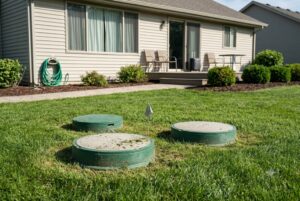
Underneath thousands of Washington properties sits a system most homeowners never think about until it stops working, and by the time it fails, the sale is already at risk. Buried tanks and drainfields don’t have the same “tell” as a cracked roof or a leaking faucet; they just keep working until they don’t, often when a buyer’s inspector shows up. Danos Septic has spent 30 years helping sellers get ahead of that moment instead of reacting to it when an offer is already on the table.
This blog breaks down exactly what a septic inspection involves, why it can make or break a closing date, and what actually happens underground during the process. You’ll also learn what counties require it, what inspectors are looking for, and what to do if the report doesn’t come back clean.
Why Septic Inspections Matter in a Home Sale
This one report is playing a bigger role in financing decisions. A buyer’s lender won’t close on a home with a known septic deficiency, and most buyers won’t either, once they know there is a system on the property.
What Lenders and Buyers Actually Look For
Financing decisions increasingly hinge on this single report. A buyer’s lender will not close on a home tied to a documented septic deficiency, and most buyers won’t move forward without one either once they know a system exists on the property.
- Proof that the tank has been pumped and inspected within the required window.
- Confirmation that the drainfield is absorbing wastewater properly.
- A licensed inspector’s report filed with the county, not a verbal assurance.
- Disclosure of any known defects under Washington’s Seller Disclosure Statement (RCW 64.06).
If sellers skip this step, they don’t solve the problem; they just postpone it until a buyer’s inspector finds the problem, and then all negotiating leverage shifts entirely to the other side of the table.
A septic system doesn’t ask permission before it fails, and neither does a lender’s underwriting department.
When Is a Septic Inspection Required?
Whether an inspection is legally required, or simply expected by every buyer’s lender, depends heavily on where the property sits.
Washington’s Time-of-Sale Rules
Some counties in western Washington do this as a mandatory step, not an optional courtesy. For example, health district records in Kitsap County show that in one recent reporting period, of 1,743 property conveyance inspections completed, about 27 percent found a significant deficiency. That means more than one in four sellers went into closing with an unresolved issue on paper.
| County | Requirement Before Transfer |
| Kitsap | Full system inspection required by the Health District |
| Mason | Inspection or O&M report required for most systems |
| Thurston | Inspection or O&M report required at or near sale |
| Pierce | Inspection or O&M report required at or near sale |
A time-of-sale inspection completed through Danos Septic is filed directly with the county on the seller’s behalf, which removes one more task from an already long closing checklist. Sellers in Shelton, Silverdale, Bremerton, and Port Orchard work with us specifically because we know each county’s submission process without needing it explained twice.
What Happens During a Septic Inspection
Most sellers assume an inspector simply opens the tank lid and looks inside. In reality, a proper inspection combines several distinct tests, and skipping any of them can leave a failing drainfield undetected.
1. The Dye Test
Technicians inject a non-toxic colored dye into the plumbing system and run water to observe how effluent flows through the tank and out into the leach field. If dye gets on the lawn or touches nearby water, that is a sure sign the system has already failed.
2. The Hydraulic Load Test
This test is most important on vacant or lightly used properties since observation alone will not tell you about a drainfield with no recent flow. Water is added at a controlled rate to mimic normal household use, and the inspector returns to record the response of the soil over the next few days.
3. Camera and Baffle Checks
A video camera run through the inlet and outlet lines reveals root intrusion, pipe cracks, and damaged baffles, none of which are visible from the surface. A corroded outlet baffle in particular may allow solids to pass to the drainfield, quietly shortening the remaining life of the system.
Common Issues Found During Pre-Sale Inspections
Certain problems show up again and again once technicians actually look past the tank lid.
- Damaged or missing baffles, allowing solids to bypass the tank entirely
- Saturated drainfields, often from years of heavier water use than the system was designed for
- Root intrusion, cracking pipes from the inside out over time
- Excess sludge accumulation, reducing the tank’s effective treatment capacity
- Undocumented repairs, leaving no paper trail for a buyer’s lender to review
Left unaddressed, any one of these can surface, sometimes literally, right in the middle of a closing timeline. If a buyer discovers a failed baffle during his own inspection, he’s not going to just ask for a discount; many will walk away altogether rather than inherit an unknown repair.
Timeline: When to Schedule Your Inspection
Getting the timing right protects sellers from two separate risks: repairs discovered too late, and reports that expire before closing.
- Schedule the inspection 60 to 90 days before your target listing date.
- Build in time for repairs if the report identifies deficiencies.
- Track your report’s validity window, since most county-accepted inspections expire after several months.
- Keep every document ready to hand off to your realtor and the buyer’s lender.
If you wait until after an offer is accepted, you’ll be negotiating repairs under the closing deadline, and that rarely works in your favor.
What If the Inspection Reveals a Problem?
A deficient report isn’t a dead end, but it does force a decision, and putting it off only narrows the options.
- Repair before listing, entering the market with a clean report already filed.
- Disclose and negotiate, adjusting price or offering a closing credit for the buyer to handle repairs.
- Sell as-is, which limits the buyer pool mostly to cash buyers, since most lenders won’t finance a home with a known failure.
Sellers who repair before listing consistently close faster, simply because there’s nothing left for a buyer’s inspector to find.
Choosing a Qualified Septic Inspector
Some septic companies aren’t licensed to do a county-recognized inspection, and an unlicensed report will be turned down out of hand, forcing sellers to start over.
- County-specific licensing for where the property is located
- Direct experience filing time-of-sale and O&M reports, not just routine pumping
- The ability to run dye tests, hydraulic load tests, and camera inspections, not just one
- Handling county submission directly, rather than leaving paperwork to the seller
Danos Septic has held that licensing across Shelton, Silverdale, Bremerton, and Port Orchard for three decades, and our technicians file directly with each county so nothing sits waiting on a seller’s desk.
Protecting Your Closing Date Before It’s at Risk
If someone is looking for the signs, a septic system rarely fails without warning. That is the whole point of finding problems via an inspection instead of your buyer’s financing department. Dye tests, hydraulic load testing, camera checks inside the tank on the baffles- there is a step for every eventuality to catch what a visual glance would miss.
Danos Septic has spent 30 years handling installations, inspections, and repairs for Washington homeowners, and our certified technicians manage the full septic inspection process, from testing through county paperwork, without adding another task to a seller’s plate. We know what each county expects because we file these reports every week, not occasionally.
If your closing date is approaching and your system hasn’t been inspected yet, the time to act is now, not after a buyer’s lender flags it. Call Danos Septic today at (360) 697-1271 to schedule your inspection and move toward closing with a report that’s already working in your favor.