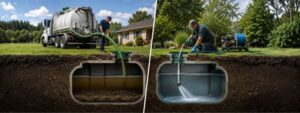
Introduction
A septic system buried under your yard is easy to forget about, until the morning your drains stop working, your yard smells like a sewage plant, and a technician tells you the system was never installed correctly to begin with. That’s not a hypothetical. That’s what happens to Washington homeowners every year, and the frustrating thing is that it could have been completely prevented. A bad septic installation doesn’t announce itself during the process; it hides underground, quietly compressing timelines, contaminating soil, and building toward a failure that lands without warning. By the time you see the signs, the damage is rarely limited to just the system.
At Dano’s Septic, preventing that outcome is exactly what 30 years of professional septic installation experience looks like in practice.
This blog covers what actually goes into a professional septic system installation, why the process matters far more than most homeowners realize, and what happens when it’s done wrong so you can make a fully informed decision before breaking ground.
What Is Involved in a Professional Septic Installation?
There’s a common assumption that septic tank installation is straightforward: dig, place, connect, cover. In reality, it’s a multi-stage process that requires soil science, engineering judgment, county compliance, and coordinated field execution.
The Steps That Actually Protect Your System
A good installation begins with a percolation test to assess how efficiently your soil absorbs water. That one number determines your drain field size, placement depth, and type of system. Skip it, and all downstream decisions are a guess.
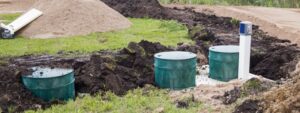
That means system design suitable for household water load, county health department approvals and permitting, accurate excavation to avoid compacting important absorption zones, and a final inspection before the system has touched a drop of wastewater. At Dano’s Septic, we walk through every county protocol before work begins and leave every client with a complete understanding of what was installed and why.
Why Proper Septic Installation Is Important for Long-Term Performance
A septic system is an underground infrastructure. You don’t see it working, and you won’t see it failing, not until it’s too late. That invisibility is exactly why the quality of the initial install carries so much weight.
What the Data Actually Shows
The EPA estimates that roughly 10% to 20% of on-site septic systems in the U.S. fail at any given time. A large percentage of those failures are related to installation defects, not age or lack of maintenance. Systems built on unverified soil data, with undersized tanks, or without proper drain field installation and grading, fail years ahead of their expected lifespan.
A properly installed septic system in suitable soil conditions, sized correctly and built to code, can last 25 to 40 years. That lifespan collapses to 10–15 years, sometimes less, when the fundamentals are compromised.
One bad installation decision made in a single afternoon can cost you a full system replacement within a decade.
Common Problems Caused by Poor Septic Installation
Poor septic system installation doesn’t just inconvenience you; it creates health risks, legal exposure, and financial consequences that compound over time.
- Drain field saturation from improper grading forces untreated wastewater to the surface
- Tank overflow and sewage intrusion into the home
- Groundwater contamination is a serious environmental and legal liability
- Permitting violations that surface during real estate transactions and block sales
- Voided warranties on components installed without licensed oversight
Each of these outcomes is preventable. They don’t happen to homeowners who hired qualified septic system services from the start; they happen to homeowners who didn’t.
How Professional Septic Installers Choose the Right System
Not every property can support the same system, and experienced septic contractors know this better than anyone. The best system is not always the cheapest or the most commonly used, but the system that is right for the special conditions of your property.
System Selection Is Site-Dependent
| Soil / Site Condition | Recommended System Type |
| Well-draining sandy loam | Conventional gravity system |
| Limited absorption capacity | Pressure distribution system |
| High water table | Mound system |
| Restricted lot size | Drip irrigation system |
Beyond soil, installers evaluate proximity to wells and water sources, the household’s daily water volume, slope and topography, and whether county regulations require specific designs for your area. We at Dano’s Septic consider the septic system installation and the long-term septic system maintenance needs your system will have, so it is built for sustainability, not just compliance.
Benefits of Hiring Professional Septic Installation Experts
The licensed installer vs. unlicensed installer debate is not just about paperwork. It’s accountability, it’s precision, it’s a system that works the way it’s supposed to for the lifetime it was designed for.
What professional installation actually delivers:
- System design tailored to your property’s real conditions, not a template.
- Full permit and county compliance documentation.
- Reduced failure risk through proper material selection and sequencing.
- Transparent communication through every phase of the project.
- Access to integrated septic repair services and ongoing support from the same team that built your system.
Dano’s Septic backs every new residential install with a 10-year limited warranty, provided regular maintenance is completed by our team. This isn’t a standard offer in this industry. It is there because we believe in what we do.
A septic system without a warranty is like a roof without a guarantee; you won’t know what was missed until water starts coming in.
How Septic Installation Impacts Property Value
Septic system installation has a direct and often underestimated effect on a property’s marketability. In Washington State, sellers are legally obligated to disclose known system defects. A system with an undocumented installation history, unresolved septic repair services history, or failed inspection will either derail a sale or force expensive remediation as a closing condition.
A system installed correctly with permits, licensed labor, and a clean inspection record does the opposite. It becomes documented proof of responsible ownership, and buyers notice. For homeowners in Bremerton, Port Orchard, and Shelton, where septic systems are the norm rather than the exception, this distinction carries real weight in any real estate transaction.
Maintaining Your Septic System After Installation
Installation is the foundation, but septic system maintenance is what protects it. Even the best-built system degrades without consistent upkeep.
What Long-Term Performance Actually Requires
- Pump the tank every 3–5 years based on household usage.
- Keep vehicles, heavy equipment, and deep-rooted vegetation off the drain field.
- Avoid introducing grease, wipes, or harsh chemicals into the system.
- Schedule inspections regularly to catch early warning signs.
- Engage the same team that installed the system for maintenance; they know it best.
Dano’s Septic provides residential septic services across Mason, Pierce, Jefferson, Thurston, and Kitsap Counties, offering the full spectrum from septic system installation to ongoing system maintenance and emergency service at any hour, day, or night.
The Decision You Make at Installation Follows Your System for Decades
Every year of a septic system’s life reflects the quality of the decisions made on day one. The skipped soil test, the undersized tank, the pulled permit, these things don’t incorrectly correct themselves. They gradually accumulate until the system breaks and gives you no choice.
Dano’s Septic has provided professional septic installation and septic system services to Washington homeowners for over 30 years. We serve Bremerton, Shelton, Port Orchard, and the surrounding region with licensed expertise, county-compliant processes, and a 10-year warranty that reflects exactly how confident we are in what we build.
If you’re planning a new install or suspect your current system wasn’t done right, call us before the problem calls you. Reach Dano’s Septic at (360) 697-1271, and a team member answers 24/7.